
Always Active
Required for security, remembering your privacy choice, and core website features. These cannot be switched off.
Musculoskeletal Medicine
Specialist assessment, diagnosis and treatment for musculoskeletal conditions.
Musculoskeletal Medicine
Welcome to our musculoskeletal services here at Clinic 360. We are a team of highly experienced and specialised musculoskeletal physicians and allied health professional consultants who share a passion for providing the best and most up-to-date care for problems of the musculoskeletal system.
You will see one of our dedicated musculoskeletal specialists, who will make an accurate diagnosis through the use of integrated point-of-care diagnostic ultrasound, and also plain film X-ray and MRI scans where indicated. Treatment options will be discussed and agreed on, ranging from referral for physiotherapy or injections to discussion of a surgical opinion. We work closely with a number of excellent local orthopaedic consultants, and should this conversation be required we can arrange it either through self-paying options or health insurance policies.
Please select an area below for the musculoskeletal services we specialise in.
Watch the Video
A short introduction to how our musculoskeletal specialists assess, diagnose and treat - and what to expect from your first appointment.
Frequently Asked Questions
Find answers to common questions about musculoskeletal medicine, diagnostic ultrasound and ultrasound-guided injections at Clinic 360.
Yes. Ultrasound does not expose patients to radiation like X-ray or CT scans. There are no contraindications like there are with MRI scans, and the imaging process is well tolerated and requires no special preparation.
Yes. Complications from injections are rare, and ultrasound allows us to minimise risk to sensitive structures like major blood vessels and nerves. Strict sterile techniques minimise infection risks, and patients will be advised on any concerning symptoms to look out for post-intervention.
Improved accuracy: by seeing the tendon sheath, joint space or bursa, we can make sure the medication is placed into the exact area of pathology. This is helpful from a diagnostic perspective - confirming the pain driver - and can also provide better treatment efficacy.
Ultrasound is used to assess the soft tissues of the musculoskeletal system. Pathology to tendons, bursas, tendon sheaths, muscles and peripheral nerves, and the presence of soft tissue lumps and bumps, can all be visualised. It can provide additional information on the appearance of joint margins and the bone cortex, but does not replace X-ray or MRI in these cases.
We cannot use ultrasound to assess for pathology of the spine. It has a further limited role in assessing for intra-articular pathology such as the cruciates (ligaments) of the knee and the labrum of the shoulder or hip. While we can see degenerative changes on ultrasound, it does not replace X-ray. For bone stress injuries or the assessment of traumatic injuries, MRI and X-rays, respectively, are the first-line imaging choices.
We use local anaesthetic to provide local anaesthesia at the time of intervention. Generally speaking, the injections are well tolerated and administered quickly, safely and efficiently by our team of experts.
Sometimes there can be some increased symptoms after the injection - termed a ‘steroid flare’ - for a couple of days, but this will resolve without any medical input. Regular analgesia is fine to take following your injection.
This will depend on the type of injection you are having. Generally speaking, steroids work the quickest, taking a couple of days to a couple of weeks to take effect.
Arthrosamid takes the longest, typically 6–12 weeks, to have a therapeutic effect. Hyaluronic acid and PRP injections fall into the middle, usually around the 2–6 week mark.
Depending on your condition, an injection may not be recommended now or at all. Where intervention is agreed, the specialist will first talk you through your diagnosis and all the available injectable options, making recommendations on the latest clinical evidence.
This will depend on your diagnosis and the extent of the pathology. Please visit our injections pages for the evidence base behind a specific intervention.
Yes. Depending on the underlying pathology, injections may be offered repeatedly to help manage symptoms. If there is no resolution or symptoms become progressive, surgical intervention will be discussed in appropriate cases.
We always advise, where possible, to have someone drive you from the clinic after any injection. Most patients will be fine to drive after 24 hours.
Yes. We will provide a full written report to you, your GP and the referring clinician where appropriate.
From the Blog

Learn how point of care ultrasound works, what it can show and why it helps deliver faster, more precise musculoskeletal assessment and treatment plans.

Clinic 360: what can you expect from us? Rapid access to expert musculoskeletal assessment, ultrasound and clear treatment options in Leeds with care.
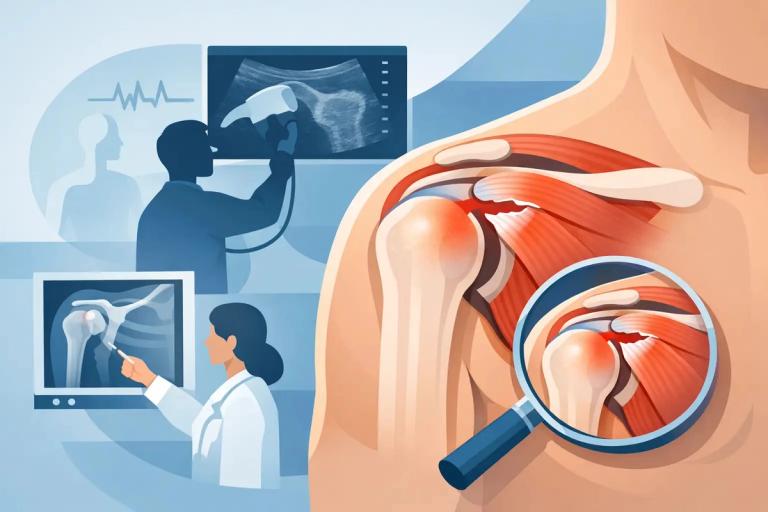
Learn how to diagnose rotator cuff tears with clear signs, tests and scans, and when to seek rapid access specialist assessment and treatment.
Book an Appointment
Book online and take the next step towards your wellbeing.