Skin Issues

Skin Cancers

Skin Issues

Skin Cancer Checks & Lesion Assessment in Leeds

Skin neoplasms are one of the most common diagnoses among patient encounters with an ever-increasing prevalence, with one of every three diagnosed cancers worldwide being a skin cancer. Evaluating between both benign and malignant neoplasms is vital for avoiding associated complications with the disease.

There are two major types: melanoma skin cancers (MSC) and non-melanoma skin cancers (NMSC), with non-melanoma accounting for 90% of all skin cancer diagnoses.Source: Autophagy as a targeted therapeutic approach for skin cancer: Evaluating natural and synthetic molecular interventions – PubMed (opens in a new tab)

NMSC are a combination of two main subtypes; these include basal cell carcinomas and squamous cell carcinomas. While MSCs are commonly recognised in 4 subtypes, these include superficial spreading melanomas, nodular melanomas, lentigo maligna melanomas and acral lentiginous melanomas. It is beyond the scope of this patient information context to discuss these individually, but more information, if of interest, can be found in the sources below.Sources: Non Melanoma Skin Cancer Pathogenesis Overview – PMC (opens in a new tab); Malignant Melanoma – StatPearls – NCBI Bookshelf (opens in a new tab)

NMSC have the best prognosis with a near 100% survival rate with appropriate treatment; metastatic melanoma has the worst and accounts for the majority of skin cancer-related deaths. Luckily, this cancer is relatively rare.Source: Overview of skin cancer types and prevalence rates across continents – PubMed (opens in a new tab)

Skin cancers occur in all races and ages worldwide but are more common in individuals with lighter/fairer skin and in adults. The biggest risk factors for developing skin cancers are high ultraviolet radiation (sunlight and sunbeds), a large number of moles or the presence of atypical large moles along with a family history of the disease.Source: Risk Factors and Innovations in Risk Assessment for Melanoma, Basal Cell Carcinoma, and Squamous Cell Carcinoma – PubMed (opens in a new tab)

Clinical features can be discrete in the early stages, with many malignant lesions not being painful, though itching, tenderness or burning symptoms may be described.

Any skin lesion that has not healed after 4 weeks needs careful review; further things to look out for include a new mole, freckle or spot that is different from others on your body, a change in size, shape or colour of a mole, or a mole that itches, hurts, bleeds or scabs regularly.Source: Melanoma skin cancer – Symptoms – NHS (opens in a new tab)

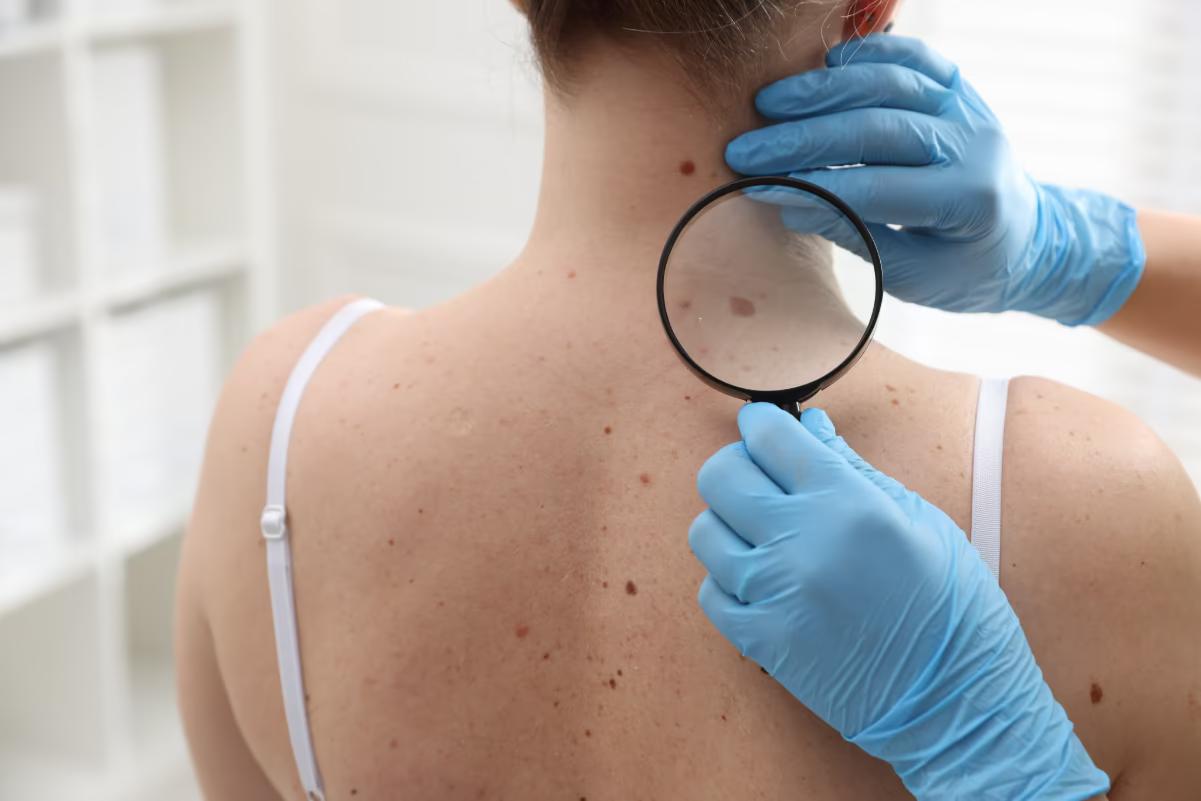
A thorough skin examination is essential for identifying premalignant and malignant lesions. This will include dermoscopy assessment, which is a vital diagnostic modality. This is, in effect, a handheld magnifier to assess suspicious lesions, giving vital information including the location, texture, size, colour, shape, borders and any recent changes in appearance to suggest malignant or benign features.Source: Usefulness of dermoscopy to improve the clinical and histopathologic diagnosis of skin cancers – PubMed (opens in a new tab)

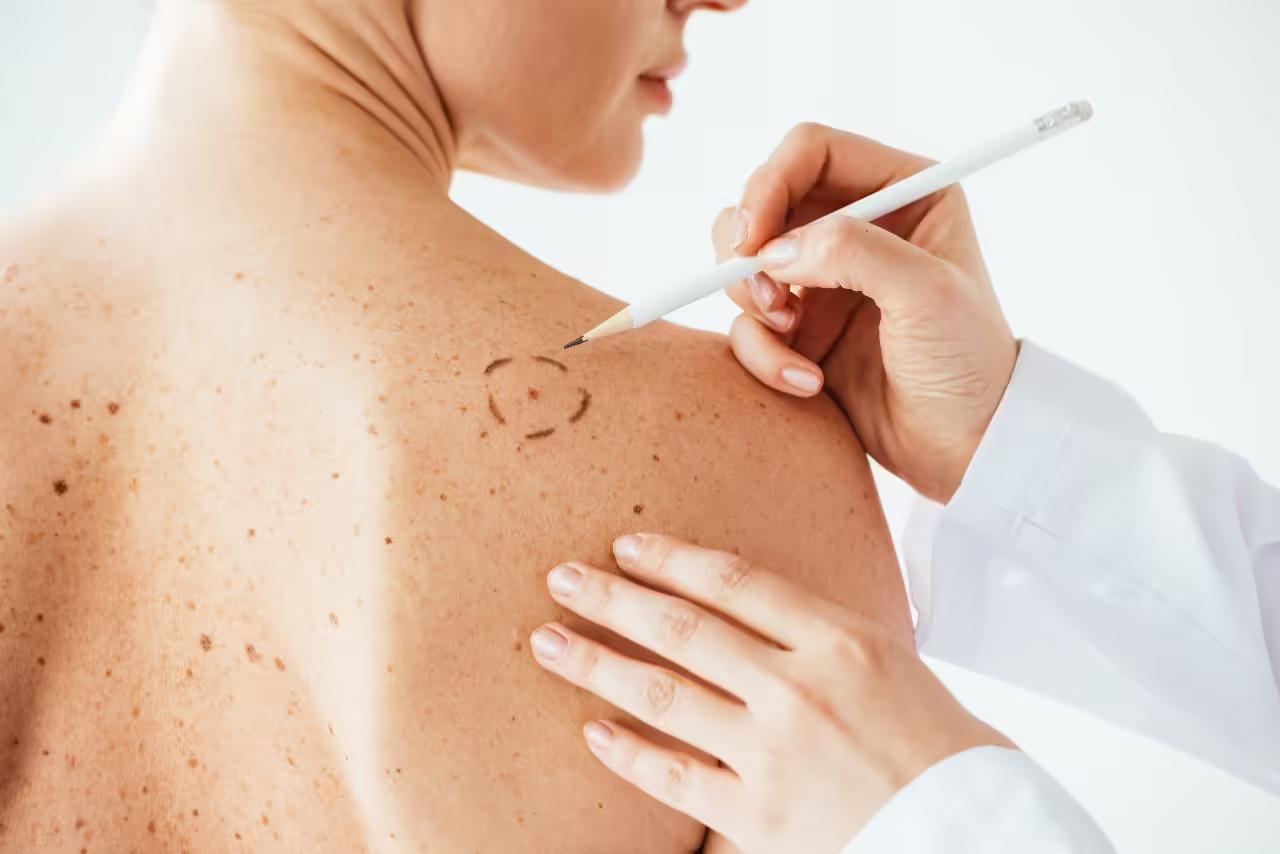
From this, suspected malignant lesions will undergo biopsy. This involves the removal of a small piece of the concerning tissue typically through a shave or punch technique, which is appropriate for most NMSC, while complete excision is usually indicated for MSC. These will be sent for histology to confirm the diagnosis.

Skin cancer treatment depends on the type, location, stage of the disease and evidence of metastases (spread to a different part of the body). Common treatment options include:

What We Help With

Other Skin Conditions

Explore the other Skin Issues conditions we assess and treat.

Move Better. Live Brighter.

Expert care for today. A healthier tomorrow.

Book an appointment

Patient Reviews

Real People.Real Results.

Hear from patients who have trusted Clinic 360 with their care.

5.0from 6 Dermatology Reviews

  • Dermatology Review

    I would like to recommend Dr K Bhatti - Consultant Dermatologist, he left no stone unturned all my 5 months of upset and stress over my skin condition was worth every penny of the consultancy fee so if your worried about a skin complaint, i have a longish wait to go but all my extra worry has gone as Dr Bhatti listens, very helpful cannot thankyou enough

    Lisa kincaidClinic 360 patient

Book an Appointment

Expert Care Starts Here

Book online and take the next step towards your wellbeing.

  • QuickBooking
  • Secure& Private
  • ExpertSupport

Accreditations & memberships

  • British Association of Sport and Exercise Medicine
  • Faculty of Sport and Exercise Medicine UK
  • British Association of Dermatologists
  • Royal College of General Practitioners
  • General Medical Council
  • Health and Care Professions Council
  • Chartered Society of Physiotherapy
  • Care Quality Commission
  • Verified on Doctify